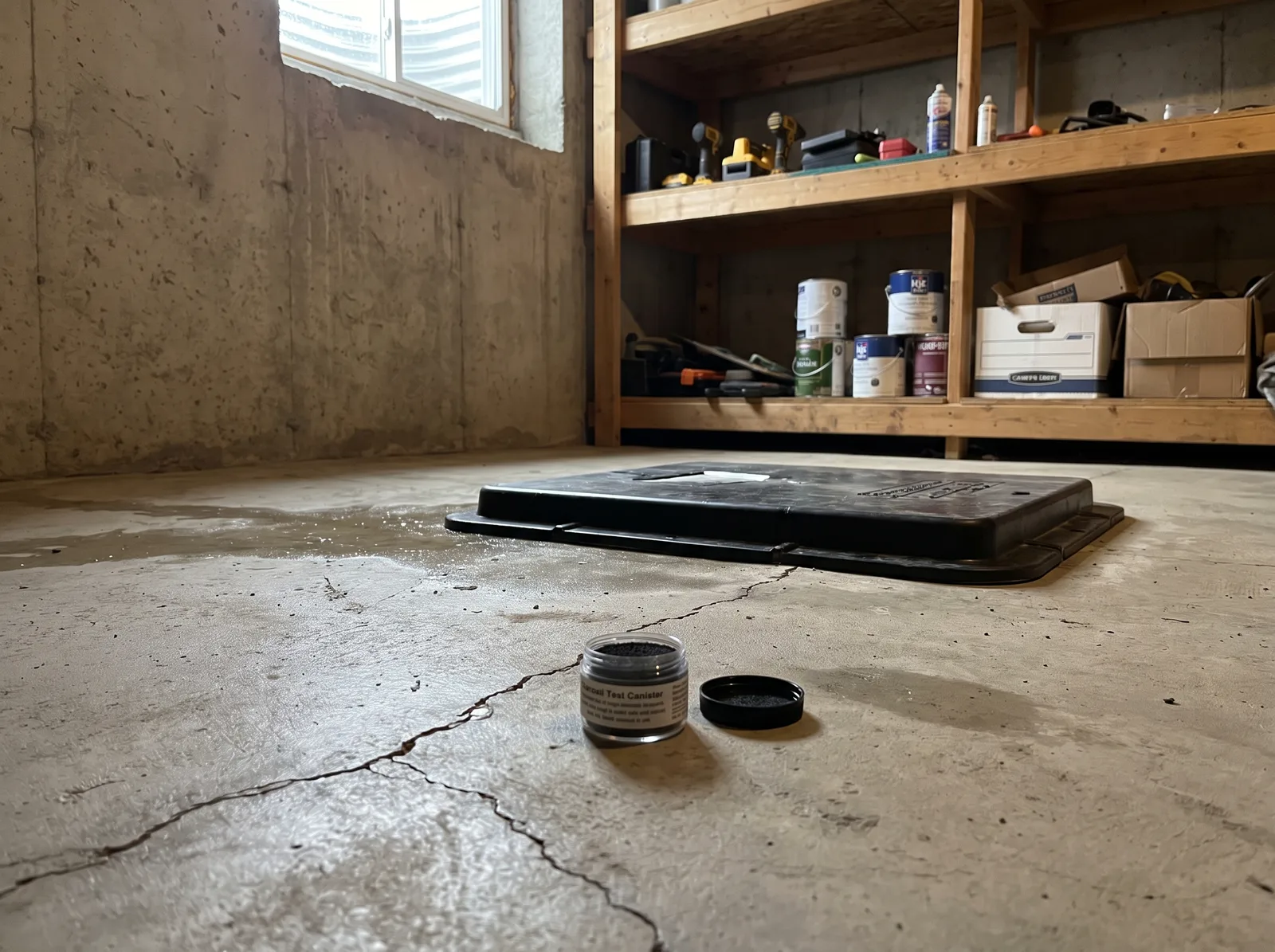
What we check on a York radon visit
The visit is the lowest lived-in level, the test conditions, and the pipe if one is already there. It is how a system gets sized.
The test and the room it sat in
A number from a closed house, at the level where people spend time, is usable. A canister in a drafty utility room with the windows open is not. York, Red Lion, and the newer townships all get the same question: was the house actually closed for the test?
Slab, stone, or a dirt crawl
A poured slab with a sump is the common York County foundation, and it usually takes a suction point. Older city and borough stone needs a look before anyone assumes a hole in the floor is the right collection point. A crawl gets a membrane conversation, not a slab detail copied onto dirt.
The pipe that is already there
We look at fan noise, the manometer if one is fitted, the sump lid, and where the pipe ends relative to bedroom windows. A builder’s rough-in with no fan is written up as an activation, not as a new system from scratch. How a result is read is on how we read a radon test. The install order is on radon mitigation.
Frequently Asked Questions
Do you publish a certification number here?
No. This page is the checklist for a York County house. Testing and mitigation follow DEP and EPA guidance. A certificate number is not a substitute for reading the foundation in front of us.
What if the house already has a white pipe?
We check whether the fan runs, whether the sump is sealed, and whether the discharge clears windows and fresh-air intakes. A pipe with a dead fan is not a finished system.
Related services
Want this checklist on your house?
Call or send the quote form — we reply with next steps.