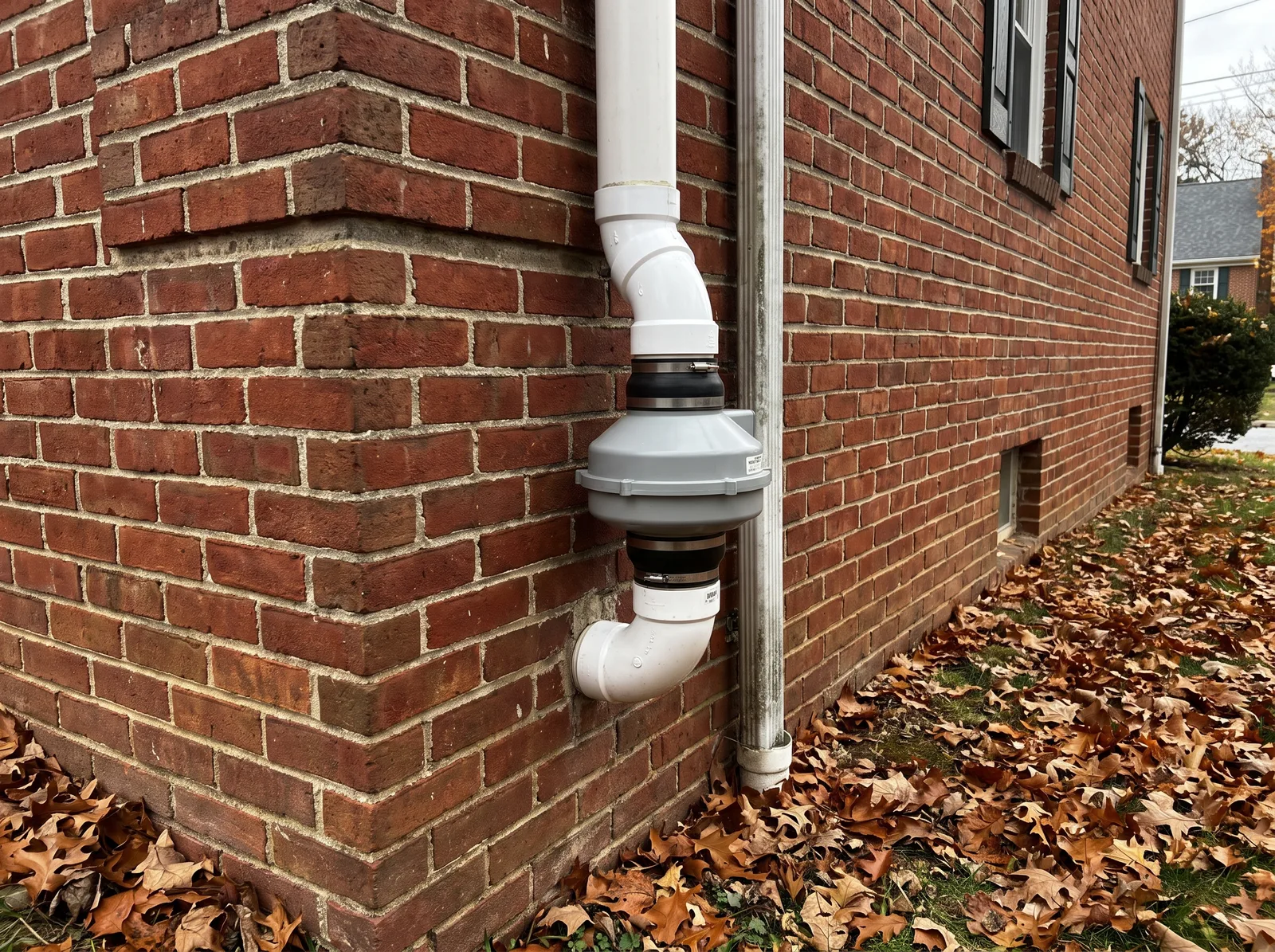
Radon Mitigation in York, PA
York County sits in EPA Zone 1. We test first, size the system to the house, then prove the drop with a post-mitigation test — not a pipe guess from a ZIP code.
Why York County radon jobs look like this
York is the county seat. Downtown brick rows around Continental Square and the Codorus sit on stone or brick basements. A few miles out you get township farmhouses, mid-century ranches, and later slabs with a sump. Those foundations do not take the same suction point.
The county is EPA Zone 1 — higher potential than a lot of the mid-Atlantic. That is a soil-and-geology note, not a diagnosis of your living room. A neighbor’s reading does not set yours.
This page is the process. Supporting work lives on the services list: testing, sub-slab depressurization, fan repair, and real-estate tests.
The order we follow (EPA and PA DEP guidance)
Pennsylvania DEP certifies radon testers and mitigators. We follow DEP and EPA guidance for how a job is scoped and checked: test, design to the foundation, install, then prove the drop.
1. Test. A short-term test in the lowest lived-in level, under closed-house conditions. EPA’s action level is 4 pCi/L; we still talk through 2–4 pCi/L homes case by case. See radon testing.
2. Diagnose the house. Walk the basement or crawl, find the sump, note stone vs. block vs. slab, and pick suction points that will actually move air under that floor. A York city stone basement is not a Springettsbury slab.
3. Mitigate. Most York County houses get sub-slab depressurization: sealed suction, PVC, an inline fan, and an exhaust away from windows. Crawl spaces may need a membrane instead of a slab hole.
4. Post-test. The fan runs, then we test again. A manometer on the pipe tells you the system is pulling; the second test tells you the air in the house actually dropped.
What you can expect on a York job
We start on site. Layout and suction have to match the foundation you have — stone downtown, a township slab, or a crawl — not a fan sold from a photo of the street.
The visit covers the assessment, the system design, and a post-mitigation test after the fan is running. Read the services list, then use the quote form or call Radon Mitigation York to schedule.
Next step: the mitigation process, the services list, or the quote form.
What you get from a York County radon crew
Radon is the whole job here — test, system, retest. One county, one process, a phone you can call.
-
Test first
No pipe until we know the level and the foundation.
-
Size to the house
Stone, block, slab, and crawl are not the same suction job.
-
Prove it after
Post-mitigation test is part of the work, not an add-on.
Frequently Asked Questions
Questions we hear on York County jobs.
Do you follow Pennsylvania radon rules?
Yes. Pennsylvania DEP certifies testers and mitigators. We follow DEP and EPA guidance for testing, system design, and the post-mitigation check. The visit is what scopes the house — not a ZIP-code guess.
How long does a typical York mitigation take?
Most installs are a one-day job once the test and the layout are settled. Testing adds days before and after. A crawl-space membrane or a tight city-row basement can add time. The visit sets the calendar, not a generic same-week promise.
Do you work outside York city?
Yes. York County is the footprint — Red Lion, Dallastown, Spring Grove, Dover, Shrewsbury, the Hanover edge, Hellam, and Wrightsville are on the service-areas list.
What radon level means I need a system?
EPA’s action level is 4 pCi/L. That is the usual line for mitigation. Readings between 2 and 4 are not “fine forever” — we talk through how the lowest level is used and whether a sale is pending. A neighbor’s number does not set yours. Placement rules live on radon testing.
How much does radon mitigation cost in York County?
The quote follows the foundation, not a county-wide average. A simple township slab with a short exhaust is a different job than a downtown stone basement, a crawl that needs a membrane, or a fan repair on someone else’s pipe. Photos of the lowest level through the quote form get you a range.
Do you retest after the fan is running?
Yes. A manometer on the pipe tells you the system is pulling. The second test tells you the air in the house actually dropped. Post-mitigation testing is part of the work, not an add-on. Keep windows closed for that check the same way you did for the first test.
How loud is the fan, and what is the U-tube on the pipe?
A healthy outdoor fan is a low hum, not a window unit. The manometer — the U-tube or gauge on the PVC — should show suction while the fan runs. A screaming fan or a gauge at zero is a repair visit, not “normal.”
Nearby areas
Ready to talk through the job?
Call or send the quote form — we reply with next steps.